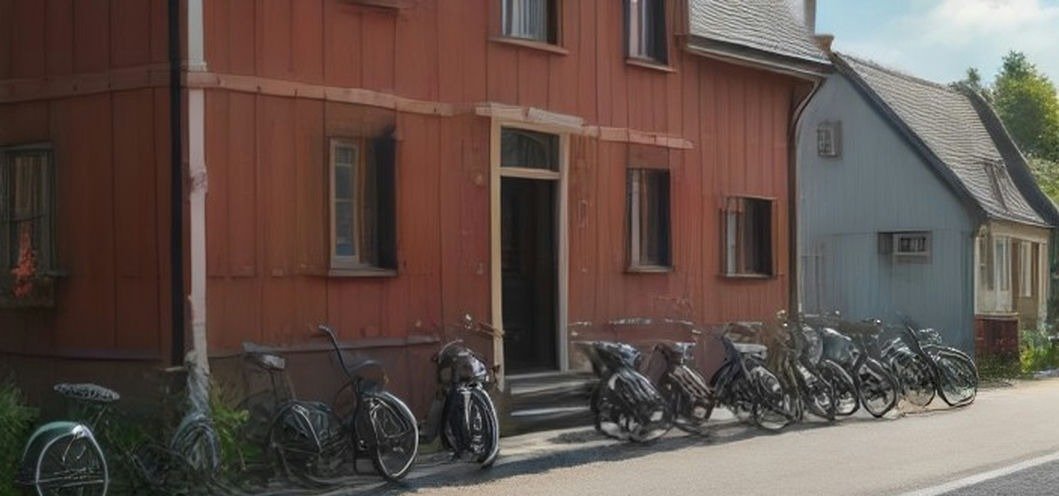
Quick answer: Mopedum was a small nostalgia museum in Nynäshamn, Sweden — officially called Mopedum – Svenska Nostalgimuseet (the Swedish Nostalgia Museum). It displayed vintage mopeds from the 1950s and 1960s alongside period rooms, old furniture, clothes, toys, and everyday objects from post-war Sweden. The museum is now permanently closed, according to Google and TripAdvisor listings, and its exact closure date is not publicly verified. This guide explains what Mopedum was, what visitors found inside, why the little two-wheeled machines it celebrated matter so much in Swedish culture, and what to see in Nynäshamn instead.
If you searched for mopedum, you probably found a confusing mix of results. Some pages describe it as a museum, others as a travel attraction near Nynäshamn, and a few barely mention it at all. A search result about a statistics method called MOPED and another about German driving licences can make the picture even messier. The truth is simpler than the search results suggest — and more interesting.
Mopedum was a real place, at a real address, with real visitors who left real reviews. It was not a big national museum with a gift shop the size of a supermarket. It was a quirky, personal collection: the kind of museum where the owner has gathered the objects of an entire era under one roof, and where a moped is never just a moped — it is a memory of a first job, a first taste of freedom, or a summer that never quite ended. This article tells that story properly: what the museum was, what was inside it, why Swedish mopeds became a cultural phenomenon in the first place, and what happened to the museum in the end.
What Is Mopedum?
Mopedum — full name Mopedum – Svenska Nostalgimuseet — was a museum in Nynäshamn, a harbour town about 60 kilometres south of Stockholm on Sweden’s Baltic coast. The name itself is a clue to what it was: “moped” plus the Latin-sounding ending “-um”, the kind of ending museums use (think “museum”, “auditorium”). In Swedish, the museum described itself as “museet för dig som gillar prylar, möbler, kläder, leksaker mm” — the museum for people who like gadgets, furniture, clothes, toys, and more.
That description matters, because it corrects the most common misunderstanding about Mopedum. The mopeds were the headline act, but they were only one part of the show. TripAdvisor reviewers who visited repeatedly made the same point: “Mopeds are just one small aspect of this eclectic collection.” The museum went “well beyond the history of mopeds from the 50s and 60s” and retraced “the changes to society along with the cultural backdrops” of post-war Sweden. In other words, Mopedum was not a vehicle museum. It was a museum of everyday life — and the moped happened to be the most beloved everyday object of the era it celebrated.
Quick Facts About Mopedum
| Fact | What can be verified |
|---|---|
| Full name | Mopedum – Svenska Nostalgimuseet (Swedish Nostalgia Museum) |
| Location | Vikingavägen 39, 149 40 Nynäshamn, Sweden |
| Coordinates | 58.910958, 17.945153 |
| Category | Museum, history museum, café |
| Status | Permanently closed (Google and TripAdvisor listings) |
| Visitor rating | 4.8 out of 5 stars, based on 69 reviews |
| Price level | Inexpensive |
| Phone (on record) | +46 8 520 132 00 |
| Website (on record) | mopedum.se |
| Era covered | Swedish everyday life, mainly 1950s–1970s |
| Main exhibits | Vintage mopeds, period rooms, furniture, clothes, toys, household objects |
| Exact closure date | Not publicly verified — no verified source gives a date |
| Current use of the building | Not publicly verified |
| Wikipedia page | None |
The table is deliberately honest about its gaps. The exact date Mopedum closed is not something any public source states clearly, and this article will not invent one. What is certain is that the museum’s own website has gone quiet, Google lists the operating status as permanently closed, TripAdvisor carries the same notice, and the blog articles written about it in 2026 — two of them, on independent sites — both describe it in the past tense. A place that was once rated 4.8 out of 5 by its visitors has become a memory of a memory: a nostalgia museum that is now itself an object of nostalgia.
Why People Search for Mopedum
Most people who type “mopedum” into Google fall into one of a few groups, and understanding them explains why the search results look the way they do.
Travellers planning a trip to Nynäshamn. Nynäshamn is the ferry port for Gotland, Sweden’s largest island, and a popular day trip from Stockholm. Travel guides and hotel sites still list Mopedum among the town’s attractions, because their databases update slowly. A visitor who finds it on an Expedia or Omio page and tries to go there today will be disappointed — which is exactly why an up-to-date guide matters.
Vintage moped enthusiasts. Sweden’s moped culture of the 1950s and 1960s has a devoted following, and Mopedum was one of the few places where that culture was collected and displayed. Collectors search for the museum’s name to find out what happened to its collection and whether any of its machines survive elsewhere.
The simply curious. Like other unusual words this blog has covered, “mopedum” looks invented — and in a sense it is, since it is a coined name rather than a dictionary word. Readers who meet it in a list of attractions or a travel article want to know what it actually is. That curiosity is the same impulse behind the guide to Feschon, another coined term that turns out to have a real story hiding behind it — except that in Mopedum’s case, the story is verifiable, physical, and rooted in a real town.
People who remember it. The museum’s visitors left 69 reviews and a 4.8-star average. Some of them will search for it again years later, wondering whether it is still there. For them, the honest answer — no, it has closed — is better than a travel page that still lists it as open.
What Was Inside Mopedum
No complete catalogue of Mopedum’s collection survives online, and the museum’s own website is no longer active. But the visitor reviews, the travel listings, and the two blog profiles published in 2026 agree on the shape of what was inside, and together they give a clear picture.
The mopeds
The centrepiece was a collection of historic Swedish mopeds, mostly from the 1950s and 1960s — the golden age of the Swedish moped. These were machines from the great Swedish marques: Monark, Crescent, and Husqvarna, along with models from other European makers that were sold in Sweden, such as Puch, Zündapp, and Kreidler. The bikes were displayed as they would have been ridden: upright, practical, and often in the faded pastel colours of the era — mint green, powder blue, cream, and deep red.
What made the display special was context. The mopeds were not lined up in a sterile row like cars in a showroom. They sat among the objects of the world they came from: workshop tools, petrol cans, oil-stained workbenches, and the paraphernalia of the small repair shops that kept them running. A moped in 1950s Sweden was not a toy for most of its life. It was a working vehicle — the way a factory worker got to the factory, the way a teenager got to school, the way a family got to the summer cottage. Mopedum showed it that way.
The period rooms
Beyond the mopeds, the museum recreated rooms from Swedish homes of the 1950s, 1960s, and 1970s. A living room with its wooden radio, patterned curtains, and heavy furniture. A kitchen with enamel pots, a coffee grinder, and the kind of crockery that many Swedish families still recognise from their grandparents’ cupboards. Bedrooms, workshops, and corners full of toys — tin cars, dolls, board games — that children of the era grew up with.
This is the part of the museum that reviewers remembered most fondly. A moped is interesting to an enthusiast; a period room is interesting to everyone, because everyone has a grandmother’s kitchen or a childhood bedroom somewhere in their memory. The rooms turned the museum from a vehicle display into a time machine, and they explain why a museum about mopeds earned a 4.8-star average from visitors who were not necessarily moped fans at all.
The café
The listings also record a café on the premises. Small Swedish museums often run a café as part of the visit — coffee, a cinnamon bun, and a chance to sit among the exhibits — and Mopedum was no exception. For many visitors, the café was where the visit slowed down and the conversation started: older visitors telling younger ones what the objects on the shelves had been used for, and younger visitors discovering that the past was not as distant as they had assumed.

The Swedish Moped Boom: Why a Whole Museum Existed
To understand why anyone would build a museum around a moped, you have to understand what the moped meant in Sweden. In most countries, a moped is a minor vehicle — a cheap way to get around, quickly forgotten. In Sweden in the 1950s and 1960s, it was a social revolution on two wheels.
The law that started it all: 1 July 1952
The story begins with a law. On 1 July 1952, Sweden legislatively excluded the moped — then officially called a “bicycle with auxiliary engine” — from the restrictions that applied to heavier two-wheeled vehicles. A moped owner needed no registration, no driving licence, no insurance, and paid no vehicle tax. Anyone aged 15 or older could ride one. The engine could be no more than 50cc and 0.8 horsepower, and the machine had to have two separate brakes — but within those limits, the moped was essentially free transport.
The effect was immediate and dramatic. Around 60,000 mopeds were sold in Sweden in 1952 alone, and sales rose to more than 100,000 a year soon after. By 1957, an estimated 400,000 mopeds were on Swedish roads. By 1964, the figure had passed 750,000 — in a country whose population was then under eight million. Sweden became, for a time, the fastest-growing moped market in the world.
From workhorse to freedom machine
The Swedish state had imagined the moped as a utilitarian vehicle: a cheap way for workers to get to work. The law’s authors assumed workers would be the primary users and that the moped would be used for practical transport rather than pleasure. For a few years, that is roughly what happened. The first mopeds were literally bicycles with a small engine bolted on — Husqvarna’s first moped, the Novolette of 1952, was a reinforced bicycle with a 40cc engine and a petrol tank.
But the machine refused to stay utilitarian. By the mid-1950s, manufacturers were building mopeds that looked less like bicycles and more like small motorcycles, and the buyers were increasingly teenage boys rather than factory workers. A 1961 change in the law completed the transformation: the moped no longer needed to resemble a bicycle or even have pedals. The moped had become what a research paper from Sweden’s KTH Royal Institute of Technology calls a “freedom machine” — a vehicle for independence, speed, and identity, rather than the useful tool the state had wished for.
The great Swedish marques
Three names dominate the story of the Swedish moped, and all three would have been represented in Mopedum’s collection.
Husqvarna. The arms manufacturer turned motorcycle maker built its first moped, the Novolette, in 1952 — essentially a bicycle with a bolted-on 40cc engine imported from Germany. Around 25,000 Novolettes were sold in the first two years. Later models included the Roulette (1956–57), designed by the famous Swedish industrial designer Sixten Sason, the Corona scooter of 1958, and the Cornette. Husqvarna produced around 170,000 mopeds in total before its moped division was merged with other Swedish makers in the early 1960s.
Monark. Sweden’s largest motorcycle producer, founded in 1908, built mopeds alongside its motorcycles from the early 1950s. Its utility mopeds — such as the Monark M 24 of the mid-1950s — were the workhorses of the boom: sturdy, practical, and everywhere. Its sports mopeds, like the Monark M 31 of 1957, were aimed squarely at young riders. In 1963, Monark, Crescent, and Husqvarna formed MCB (Monark Crescent Bolagen), consolidating the Swedish moped industry under one roof.
Crescent. The third of the great Swedish names, Crescent produced mopeds and scooters — including the Crescent 1145 scooter of 1955 — and became part of the MCB group in the early 1960s. Together, these three makers defined what a Swedish moped looked like, and their machines are the ones collectors hunt for today.
Why the moped mattered — and still does
The moped mattered in Sweden for reasons that go beyond transport. For a generation of Swedish teenagers, it was the first machine they owned, the first vehicle they could repair themselves, and the first taste of going where they wanted, when they wanted. For workers, it was affordable mobility in a country where cars were still a luxury. For the country as a whole, it was a homegrown industry: Swedish factories, Swedish designs, Swedish jobs.
That is why a museum like Mopedum could exist at all. A moped is a small, cheap, unglamorous machine. But in Sweden, it carries the weight of a whole era — post-war optimism, rising living standards, teenage rebellion, and the long Swedish summer. The museum’s job was to hold that weight in one place, where people could walk through it.
More Than Mopeds: The Nostalgia Rooms
The nostalgia rooms were Mopedum’s quiet masterpiece, and they deserve a section of their own — because they explain why the museum was rated so highly by ordinary visitors, not just by moped enthusiasts.
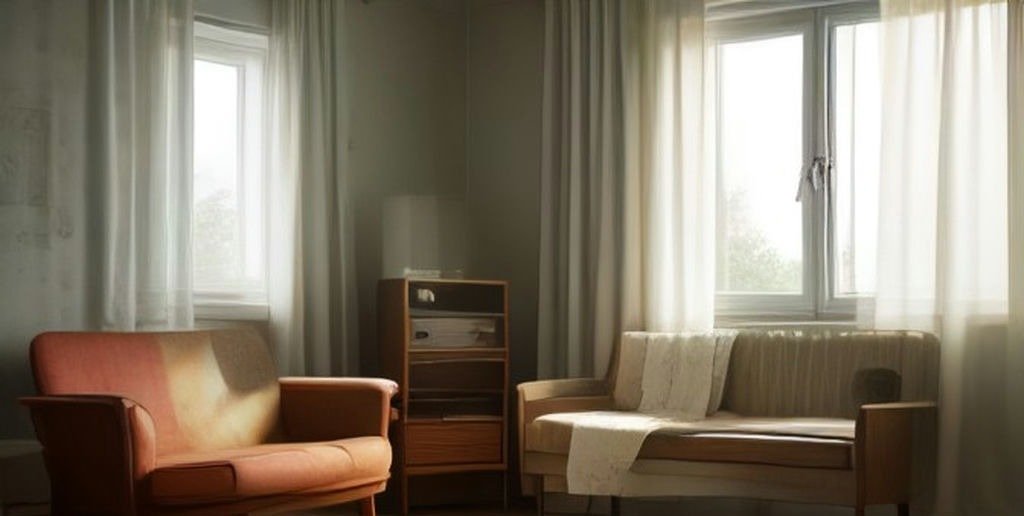
A period room works differently from a display case. A display case says: look at this object. A period room says: step into this life. Mopedum’s rooms recreated Swedish homes of the 1950s through the 1970s with furniture, wallpaper, kitchenware, radios, toys, and clothes arranged as if the family had just stepped out. Visitors could see how a living room was furnished, what a kitchen looked like before fitted units and microwaves, and what children played with before screens.
The effect is hard to overstate. For older visitors, the rooms were a direct hit of recognition — the radio their father listened to, the coffee pot their mother used, the toy car they had as a child. For younger visitors, the rooms were a revelation: proof that everyday life looked completely different within living memory, and that the objects we now treat as antiques were once just… things, used every day, worn out, and thrown away. That is the whole point of a nostalgia museum, and it is why Mopedum’s reviewers kept using the same word: “quirky”. The museum was not polished or corporate. It was personal, crowded, and full of things that mattered to someone.
Why Mopedum Closed
Here is the honest answer: no verified public source states why Mopedum closed, or exactly when. The museum’s website has gone quiet, Google lists it as permanently closed, TripAdvisor carries the same notice, and the 2026 blog profiles describe it in the past tense. None of those sources gives a closure date, a reason, or any statement from the museum’s owners.
That absence of information is itself worth understanding, because it is typical of small, privately run museums. A large national museum closes with press releases, news coverage, and a farewell exhibition. A small private museum often closes quietly: the owner retires, the lease ends, the running costs stop adding up, or the collection is sold or dispersed. Any of those things may have happened to Mopedum. Without a statement from the people involved, guessing would be dishonest — and this article will not guess.
What can be said is what the closure means for visitors:
- Do not plan a visit to Mopedum. The museum is listed as permanently closed, and travelling to Vikingavägen 39 expecting an open museum will end in disappointment.
- Do not rely on travel pages that still list it as open. Hotel and travel sites update their attraction databases slowly. Expedia’s Nynäshamn pages, for example, still describe Mopedum as a museum to visit, because the listing has not caught up with the closure.
- The collection’s fate is not publicly verified. No source confirms what happened to the mopeds, furniture, and objects after the closure — whether they were sold, donated, kept in storage, or moved elsewhere. If you are a collector hoping to trace a specific machine, there is no public record to follow.
What the Top Blogs Say About Mopedum — and Where They Fall Short
Only a small number of independent blogs have written dedicated articles about Mopedum, and reading them side by side shows both what is known and how thin the coverage is.
| Competitor source | What it covers | Main weakness |
|---|---|---|
| noodlemagazines.co.uk | “Mopedum: Sweden’s Vintage Moped Museum and Nostalgic Legacy” — the museum’s link to Svenska Nostalgimuseet, the 1950s–1970s era, and its closure | A general overview; gives little verifiable detail about the collection, the closure date, or what happened to the exhibits |
| kentfaith.de | “Mopedum: Sweden’s Vintage Moped Museum and Its Legacy” (29 October 2026) — the museum as a storyteller of everyday Swedish life | Similar in scope to the Noodle article; thin on checkable facts such as dates, addresses, and visitor information |
| Expedia (Nynäshamn hotel pages) | Lists Mopedum as a nearby cultural museum and attraction, about 11 km from Nattaro | Outdated — still presents it as a place to visit, with no mention that it is permanently closed |
| TripAdvisor | Visitor reviews and the permanently-closed notice; address 39 Vikingavägen, Nynäshamn 149 40 | Reviews are from 2017 and earlier; no recent updates on the collection’s fate |
| mopedum.se (listing) | The museum’s own former listing: address, phone, 4.8-star rating from 69 reviews, “inexpensive” price level | The site itself is no longer active as a museum website |
The pattern across these sources is clear: everyone agrees on the basics — a nostalgia museum in Nynäshamn, vintage mopeds, 1950s–1970s everyday life, now closed — and nobody can add much beyond that. The two blog articles are useful introductions, but they are essentially the same story told twice, and neither one answers the questions a serious reader would ask next: when exactly did it close, why, and where did the collection go?
This article does not pretend to answer those questions either, because no verified source does. What it does instead is give you the verified facts, the verified history of the machines the museum celebrated, and the practical information you actually need — starting with what to do in Nynäshamn now that Mopedum is gone.
Visiting Nynäshamn Now: What to See Instead
Mopedum may be closed, but Nynäshamn is still very much worth a visit — and the town has plenty to offer a traveller who came looking for Swedish coastal history and a slower pace of life.
The harbour and the ferry to Gotland. Nynäshamn is the main ferry port for Gotland, Sweden’s largest island, with regular crossings to Visby. Even if you are not sailing, the harbour area is the heart of the town: fishing boats, seafood restaurants, and the kind of Baltic light that photographers travel for. The ferry terminal is a short walk from the town centre.
Nynäshamn Railway Museum (Nynäshamns Järnvägsmuseum). If Mopedum’s appeal was old machines and transport history, the railway museum is the closest surviving equivalent in town. Run by a non-profit society formed in 1972, it preserves the old engine shed at Nynäsgård and a collection of steam and diesel locomotives, passenger coaches, and freight wagons from the Stockholm–Nynäs railway, which opened in 1901. It is open for visits in the summer season, typically Sundays from 1 July to 31 August — check before you go, as hours vary.
The town itself. Nynäshamn is a small, walkable harbour town with beaches, a lighthouse, and the kind of red wooden houses that define the Swedish coast. The walk from the centre to the harbour, past the old villas and the fishing harbour, is its own attraction.
Stockholm, an hour away. Nynäshamn is about 60 kilometres south of Stockholm, with regular trains on the Nynäsbanan line. If your interest is Swedish transport and design history more broadly, Stockholm’s museums — including the Swedish Museum of Science and Technology — hold far larger collections than Mopedum ever did.
Planning tips for Nynäshamn
- Check opening hours before you travel. Small museums in Sweden often open seasonally, and hours change year to year. A quick check saves a wasted trip.
- Do not trust old travel listings for Mopedum. If a page still lists it as open, the page is out of date.
- Summer is the best season. The railway museum, the harbour, and the beaches are all at their best from June to August, when the town is liveliest.
- Combine the trip with Gotland. If you have more than a day, the ferry to Visby is one of Sweden’s classic journeys, and the medieval town is a UNESCO World Heritage Site.
A Collector’s Guide to Vintage Swedish Mopeds
Mopedum’s closure does not mean the machines it celebrated have disappeared. Vintage Swedish mopeds are still bought, sold, restored, and ridden — and if the museum sparked your interest, here is how to approach the hobby honestly.
The models collectors look for
| Model | Era | Why collectors want it |
|---|---|---|
| Husqvarna Novolette | 1952–1956 | The first Husqvarna moped; the machine that started the boom |
| Husqvarna Roulette | 1956–1960 | Designed by Sixten Sason; the stylish face of the 1950s moped |
| Monark M 24 / Monarped | Mid-1950s | The classic utility moped — sturdy, common, and honest |
| Monark M 31 | 1957 onwards | Early sports moped, aimed at young riders |
| Crescent 1145 scooter | 1955 onwards | One of the first Swedish scooter-style mopeds |
| Husqvarna Corona | 1958 onwards | Sweden’s only moped model with a free-wheel system |
| Husqvarna Cornette | Late 1950s–1960s | The bridge between the 1950s and the 1960s |
Buying and restoring: what to know first
- Condition beats rarity. A complete, original machine in running order is worth more — and is far more enjoyable — than a rare model that is missing half its parts. Rust, seized engines, and missing trim are the three things that turn a bargain into a money pit.
- Originality matters. Collectors value original paint, original parts, and matching numbers. A repainted bike with modern parts may look smart, but it is worth less than an honest, worn original.
- Parts are a project in themselves. Some parts for Monark, Crescent, and Husqvarna mopeds are still available through specialist suppliers and enthusiast clubs, but others have to be found second-hand, fabricated, or borrowed from a donor machine. Before you buy, check that the parts you will need actually exist.
- Learn the law where you live. The rules that made the Swedish moped boom possible — no licence, no registration — applied to Sweden in the 1950s. Modern rules are different everywhere, including in Sweden, where mopeds are now divided into Class I (up to 45 km/h, licence plate and insurance required) and Class II (up to 25 km/h, no plate). Check your local rules before you ride.
- Join a club. The fastest way to learn is to talk to people who already restore these machines. Swedish moped clubs and online forums are full of enthusiasts who will tell you which models to avoid, where to find parts, and how to fix the things that always break.
If you own a piece of Mopedum’s story
If you visited Mopedum and took photographs, those photographs may now be among the few records of what the museum held. Consider sharing them with a moped forum or a local history group. Small museums disappear quietly, and visitor photographs are often the only record that remains. The same is true of any ephemera — tickets, leaflets, postcards — from the museum. They are now artefacts in their own right.
Frequently Asked Questions About Mopedum
What is Mopedum?
Mopedum was a nostalgia museum in Nynäshamn, Sweden, officially called Mopedum – Svenska Nostalgimuseet (the Swedish Nostalgia Museum). It displayed vintage mopeds from the 1950s and 1960s alongside period rooms, furniture, clothes, toys, and everyday objects from post-war Swedish life.
Where is Mopedum located?
The museum was at Vikingavägen 39, 149 40 Nynäshamn, Sweden — a harbour town about 60 kilometres south of Stockholm. Its coordinates are 58.910958, 17.945153.
Is Mopedum still open?
No. Google and TripAdvisor both list Mopedum as permanently closed, and its website is no longer active. Do not plan a visit expecting an open museum.
When did Mopedum close?
No verified public source gives an exact closure date. The museum’s listings were updated to “permanently closed” at some point before the 2026 blog profiles, which already describe it in the past tense. The exact date is not publicly verified.
What was inside Mopedum?
Vintage Swedish mopeds — mainly Monark, Crescent, and Husqvarna machines from the 1950s and 1960s — plus recreated period rooms from Swedish homes, furniture, clothes, toys, household objects, workshop items, and a café.
Why was the moped so important in Sweden?
A law of 1 July 1952 let anyone aged 15 or older ride a moped without a licence, registration, insurance, or vehicle tax. Sales exploded — around 60,000 in 1952, an estimated 400,000 mopeds on the road by 1957, and more than 750,000 by 1964. The moped became a symbol of freedom and post-war prosperity for a whole generation of Swedes.
What happened to Mopedum’s collection?
That is not publicly verified. No source confirms whether the mopeds and objects were sold, donated, stored, or moved elsewhere after the closure.
What should I see in Nynäshamn instead?
The harbour and ferry port, the Nynäshamn Railway Museum (open in summer), the beaches, and the town’s historic wooden houses. Stockholm is about an hour away by train, and the ferry to Gotland leaves from Nynäshamn.
Is “mopedum” a real word?
It is a coined name, not a dictionary word — a blend of “moped” with the museum-style ending “-um”. The name belongs to the museum itself, not to a general concept.
Can I still buy a vintage Swedish moped?
Yes. Monark, Crescent, and Husqvarna mopeds from the 1950s and 1960s are traded by collectors, at auctions, and through enthusiast clubs. Condition, originality, and parts availability matter more than rarity, and you should check the road rules where you live before riding one.
Final Thoughts
Mopedum is a small story with a large shadow. A little museum in a harbour town gathered the objects of an era — mopeds, radios, kitchens, toys — and for a while it held them in one place where anyone could walk through them. Then it closed, quietly, the way small museums do, and the objects scattered or sat in storage, and the travel websites carried on listing it as if nothing had changed.
That is the real lesson of Mopedum, and it is a lesson this blog has met before in other forms. The profile of Shani Levni deals with a subject whose public record is thin and easily distorted, and it handles the gap the same way this article does: by keeping only what can be verified and saying plainly where the record ends. The guide to Mannacote does the same for another invented-sounding name. The discipline is identical whether the subject is a person, a place, or a word — do not fill silence with invention.
For Mopedum, what can be verified is enough to make the story worth telling. A real museum stood at Vikingavägen 39 in Nynäshamn. It held real mopeds from the great Swedish boom of the 1950s — the Novolette, the Roulette, the Monark workhorses — and it set them among the rooms and objects of the Sweden that built them. Visitors rated it 4.8 out of 5. And then it closed, and nobody in the public record has said why.
If you go to Nynäshamn, go for the harbour, the railway museum, and the town itself — not for a museum that is no longer there. And if you own a vintage Swedish moped, ride it, restore it, or simply keep it safe: you are looking after a piece of the story Mopedum was trying to tell. The museum may be gone, but the machines, and what they meant to a generation of Swedes, are still very much alive.
