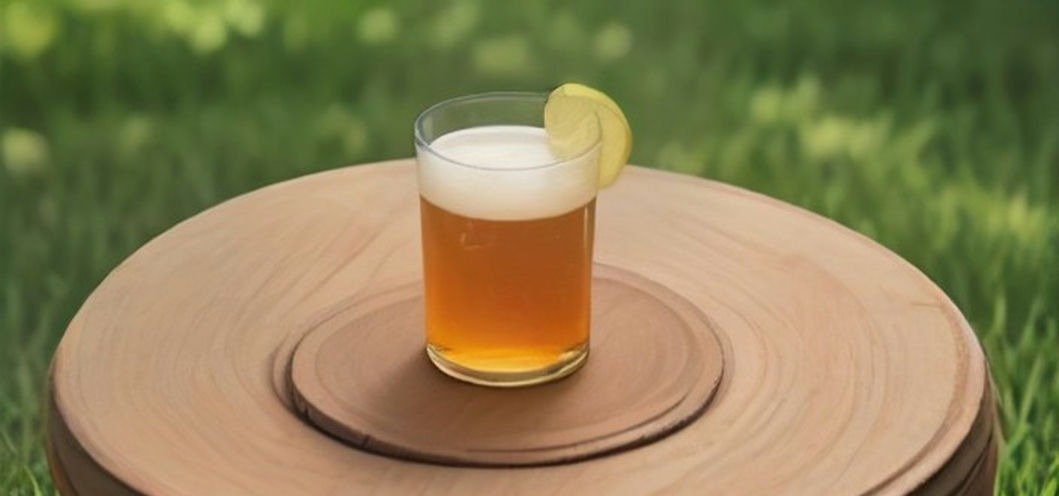
Quick answer: Pappedeckel is a German word that literally means “cardboard lid.” It joins Pappe (cardboard or stiff paperboard) with Deckel (lid or cover) to describe a flat lid or cover made from cardboard. In everyday use it most often means the round cardboard disc that covers a beer glass or sits under it as a beer coaster, but it can also describe cardboard lids on cups, containers, and boxes. It is cheap, lightweight, recyclable, and biodegradable — which is why it has become a symbol of simple, sustainable packaging.
If you have ever ordered a beer in a German beer garden, you have almost certainly met a pappedeckel without knowing its name. It is the flat, round piece of cardboard that arrives with your glass — sometimes laid across the top to keep out flies and dust, sometimes slipped underneath to catch condensation and protect the wooden table. The word sounds complicated, but the thing itself is one of the simplest objects in daily life: a piece of stiff paper, cut into a shape, doing an honest job.
Yet this humble object has a surprisingly rich story. It carries more than a century of German brewing history, it sits at the centre of a modern debate about plastic waste, it has collected meanings in slang and everyday speech, and it has recently started appearing in English-language searches as people look for sustainable alternatives to plastic lids. This guide explains what a pappedeckel is, where the word comes from, how it is made, where it is used, and why the top articles about it leave important gaps. Where a fact cannot be verified, this article says so honestly instead of inventing a confident answer.
What Is a Pappedeckel?
A pappedeckel is a lid or cover made from cardboard or thick paperboard. That is the whole definition, and it is worth keeping it that simple, because much of the confusion around the word comes from writers stretching it into something grander than it is. It is not a brand, not a product line, and not a patented invention with a single owner. It is a plain descriptive word for a plain useful object.
In practice, the word covers several closely related forms:
- A flat lid on a cup or container — the cardboard disc pressed onto a takeaway coffee cup, a soup tub, or a food container to keep the contents covered and warm.
- A beer coaster (Bierdeckel) — the round cardboard mat that sits under a glass in a pub or beer garden, soaking up condensation and protecting the table.
- A cover on a glass — the disc laid across the top of an open beer glass outdoors, keeping out insects, leaves, and dust.
- A protective cover for a box or tin — a flat cardboard lid slipped over a gift box, a storage tin, or a jewellery box.
- A plain sheet of stiff cardboard used as a cover — in workshops, kitchens, and craft rooms, any flat piece of cardboard pressed into service as a lid can be called a pappedeckel.
English speakers translate the word in different ways depending on the context: “cardboard lid,” “paperboard cover,” “cardboard coaster,” or “beer mat.” None of these is wrong. They are all the same object seen from a different angle, and the German word is useful precisely because it covers all of them at once.
Quick Facts About Pappedeckel
| Fact | What can be verified |
|---|---|
| Language | German compound word |
| Word parts | Pappe (cardboard) + Deckel (lid or cover) |
| Literal meaning | Cardboard lid |
| Main material | Paperboard or thick cardboard, often from recycled fibre |
| Common forms | Flat cup lids, container covers, round beer coasters |
| Grammatical gender | Masculine (der Pappedeckel); plural die Pappedeckel |
| Alternate spelling | Pappendeckel (with a double p) also appears in German sources |
| Best-known use | Beer coaster in German pubs and beer gardens |
| Earliest cardboard beer mats | 1880, introduced by the German printing company Friedrich Horn |
| First wood-pulp beer coaster | 1892, manufactured by Robert Sputh of Dresden |
| Brought to the UK | 1920, by Watney’s brewery, to advertise pale ale |
| Environmental profile | Lightweight, recyclable when clean, biodegradable and compostable |
| Official standard | No single official standard defines the term; uses vary by region |
| Company or brand behind it | None — no company owns the word |
| Wikipedia page for the word itself | None — the word is covered under beer mat / beverage coaster entries |
The table above is deliberately honest about its limits. The history dates come from the documented history of the beer coaster, which is the best-recorded part of the pappedeckel story. The rest — the material, the forms, the meaning — comes from the word itself and from how German speakers actually use it. There is no official body that certifies what counts as a pappedeckel, no industry standard that fixes its thickness or size, and no company that controls the term. That looseness is part of the word’s character: it describes a function, not a specification.
The Word Itself: Pappe + Deckel
German is famous for building long, precise words by joining short, simple ones together, and pappedeckel is a textbook example. Understanding the two halves explains the whole word — and it also explains why the word has picked up extra meanings over time.
Pappe: the material
Pappe means cardboard, or more precisely the stiff, thick paper known in English as paperboard. It is the material of cereal boxes, shoe boxes, book covers, and packaging inserts: pressed paper fibre, much thicker and stiffer than ordinary writing paper, but still paper at heart. The word is old in German, and it carries a slightly humble, everyday tone. Cardboard is not a luxury material. It is the material of practical things — boxes, covers, packing, and protection.
Paperboard itself became widely available in the 19th and 20th centuries, as industrial papermaking improved and demand for cheap, light packaging grew. Before that, lids and covers were made from wood, metal, cloth, or leather — all heavier, more expensive, and harder to shape. Cardboard changed the economics of covering things: a lid could now be cut, printed, folded, and thrown away for almost nothing.
Deckel: the lid — and the bill
Deckel is a much older and more flexible word. At its simplest it means a lid or a cover: the lid of a pot, the cover of a jar, the top of a box. But in everyday German it reaches further. A Deckel can be the cover of a book. And in a pub or restaurant, der Deckel is also the bill — the running tab of what you have ordered. The connection is physical and historical: in the old tradition, a waiter marked each drink as a line on the cardboard mat under your glass, so the mat itself became the record of what you owed. When the evening ended, the waiter added up the lines on your Deckel and that was your bill. The word for the lid became the word for the tab, and the expression survives in German pubs today.
Put the two halves together and you get a word that is almost comically literal: a lid made of cardboard. German speakers do not need a dictionary to understand it the first time they hear it, because the parts explain themselves. That transparency is one of the reasons the word has lasted — it says exactly what it is, with no mystery and no marketing.
The slang meaning: flimsy, trivial, worthless
Like many everyday words, pappedeckel has picked up a figurative use. In German slang it is sometimes used humorously to describe something flimsy, cheap, or unimportant. The phrase “Das ist nur ein Pappedeckel” — “That’s just a cardboard lid” — dismisses something as trivial or not worth taking seriously. The joke works because everyone knows what a cardboard lid is: thin, light, disposable, and easily crushed. Calling an argument, a plan, or an excuse a pappedeckel is a way of saying it will not hold up under pressure.
This slang use is worth knowing, because it shows up in German writing and conversation, and an English reader who meets the word in that context will be confused if they only know the literal meaning. It also tells you something about how Germans feel about the object itself: it is useful, but nobody pretends it is precious. Its value is in its disposability, not its durability — and that is a theme that runs through the whole story of the pappedeckel, including its modern role in sustainable packaging.
A Short History of the Pappedeckel
The pappedeckel did not appear all at once. It grew out of two separate histories — the history of cardboard as a material, and the history of the beer coaster as a pub object — and those histories met in Germany in the late 19th century, when beer culture, industrial papermaking, and advertising all arrived at the same moment.
Before cardboard: cloth, wood, and silver
The earliest drink coasters were not made of cardboard at all. They were shallow trays or dishes made of wood, papier-mâché, silver, or silver plate, designed for decanters and wine bottles so that they could be slid across a table without scratching it or leaving a ring. They were objects for wealthy households, not for pubs. A silver coaster was a piece of tableware, closer to a plate than to a piece of packaging.
That changed when beer moved outdoors. In the 1800s, drinking beer outside — in beer gardens, courtyards, and summer festivals — meant worrying about what might fall or fly into your glass. Flies, dust, leaves, and rain were all real problems, and a drinker needed something light and cheap to lay across the top of the glass. Cloth worked, but it was not disposable, and it soaked up beer. What was needed was a flat, stiff, cheap cover that could be used once and thrown away. Cardboard was the answer waiting for the question.
1880: the first cardboard beer mats
In 1880, Friedrich Horn, a German printing company, introduced the first coaster made of cardboard. This is the first firmly documented date in the pappedeckel story, and it matters for two reasons. First, it shows that the cardboard lid began as a printed object: Horn was a printer, and the coaster was a surface that could carry an image, a name, or an advertisement. Second, it places the invention in Germany, in the middle of a brewing culture that already treated beer as a daily drink rather than a special occasion. The cardboard coaster was not a luxury. It was a practical solution for a country that drank a lot of beer outdoors.
1892: Robert Sputh and the wood-pulp coaster
Twelve years later, in 1892, Robert Sputh of Dresden manufactured the first coaster made of wood pulp. Sputh developed a machine that pressed wood pulp into moulds, squeezed the water out, and popped out finished pieces — a process that made coasters cheaper, more absorbent, and more uniform than the earlier cardboard versions. The wood-pulp coaster soaked up condensation instead of going limp, which made it far better at its real job: sitting under a sweating glass and keeping the table dry. Sputh’s version became the standard, and the basic design — a flat, round, absorbent disc — has barely changed since.
In 1903, Casimir Otto Katz of Murgtal took the idea further, devising a way to make beer coasters from sheets of wood pulp made from spruce fibres. Katz’s method made production faster and more consistent, and his company went on to become one of the great names in beer mat manufacturing. By the early 20th century, the cardboard beer coaster was a mass-produced, everyday object across Germany — and it was already carrying advertising. Breweries quickly realised that a coaster was a tiny billboard sitting directly under a customer’s drink, and they began printing their names, logos, and slogans on it. That advertising function is still one of the main reasons coasters are printed today.
1920: the coaster crosses the Channel
In 1920, Watney’s brewery introduced the beer mat to the United Kingdom, using it to advertise its pale ale. From there the idea spread across Europe and eventually the world, though the German word did not travel with it. English speakers called the object a beer mat, a beer coaster, or a beverage coaster, and the German term pappedeckel stayed home — until the internet gave it a second life as a search term, which is how it reached this article.
The collecting habit: tegestology
One detail the history books usually mention, and the top-ranking blogs almost never do, is that beer coasters have their own collectors’ hobby, with its own name: tegestology, the collecting of beer coasters (from the Latin teges, meaning a mat or covering). Collectors trade rare, old, and unusual coasters the way others trade stamps or coins, and some 19th-century German coasters are genuinely scarce. The existence of a dedicated word for the hobby is a small but telling sign of how deeply the cardboard coaster is woven into German drinking culture. Nobody invents a Greek-derived name for collecting something nobody cares about.
| Year | Event | Why it matters |
|---|---|---|
| Before 1800 | Coasters are wood, silver, or papier-mâché trays for decanters | The coaster starts as luxury tableware, not packaging |
| 1880 | Friedrich Horn introduces the first cardboard beer mat | Cardboard makes the coaster cheap, printable, and disposable |
| 1892 | Robert Sputh of Dresden manufactures the first wood-pulp coaster | Absorbent wood pulp makes the coaster work properly under a wet glass |
| 1903 | Casimir Otto Katz refines production with spruce-fibre sheets | Mass production begins; the coaster becomes an everyday object |
| 1920 | Watney’s brewery brings beer mats to the UK | The idea spreads beyond Germany; the English “beer mat” is born |
| Today | Coasters are printed, collected, and debated as packaging | The same object is now a branding surface, a collectible, and an eco symbol |
Types of Pappedeckel
Not all pappedeckels are the same. The word covers a family of related objects, and knowing the types helps you choose the right one — whether you are buying lids for a café, covers for a craft project, or coasters for a pub. The differences come down to material thickness, shape, coating, and purpose.
| Type | Typical material | Best use | Longevity | Notes |
|---|---|---|---|---|
| Flat round cup lid | Paperboard, 300–500 gsm | Takeaway coffee and drinks | Single use | Often has a sip hole or fold-back tab |
| Slip-on round lid | Heavier paperboard, 700–1200 gsm | Gift tins, jewellery boxes, storage | High if handled gently | Recyclable if clean; avoid wax coatings |
| Beer coaster (Bierdeckel) | Absorbent wood-pulp board | Under glasses in pubs and beer gardens | Single use to a few uses | Soaks up condensation; also used as the bar tab |
| Flat container cover | Corrugated or solid paperboard | Takeaway food tubs, soup containers | Single use | Keeps food covered and warm |
| Die-cut shaped lid | Printed paperboard | Branded packaging, gift boxes, events | Single use | Custom shapes for marketing |
| Bookbinding / craft cover | Thick bookboard | Book covers, stationery, handmade boxes | Long-lasting | Often covered in cloth or decorative paper |
| Improvised cover | Any stiff cardboard | Covering a pot, a bowl, or a jar at home | Until it gets wet | The everyday, make-do pappedeckel |
The thickness of the board is measured in grams per square metre (gsm). A takeaway cup lid might use 300–500 gsm board — stiff enough to hold its shape, light enough to be cheap. A slip-on lid for a gift tin needs 700–1200 gsm, because it has to grip the tin and survive handling. A beer coaster sits somewhere in between, but what matters most for a coaster is not stiffness but absorbency: the wood-pulp board is designed to drink up condensation, which is why a good coaster feels slightly soft and fibrous rather than hard and glossy.
Coatings change the picture. A plain, uncoated pappedeckel is easy to recycle and compost. A wax-coated or plastic-laminated one resists moisture far better — which is why coated lids are used for hot soup and wet food — but the coating can make recycling difficult or impossible, depending on local rules. This trade-off between performance and recyclability is one of the central tensions in modern packaging, and the pappedeckel sits right in the middle of it.
Pappedeckel as a Beer Coaster: The Bierdeckel Tradition
If you ask a German speaker what a pappedeckel is, the first thing most of them will picture is not a coffee cup lid. It is a beer coaster — a Bierdeckel — sitting under a glass in a pub or a beer garden. The beer coaster is the most famous form of the pappedeckel, and it is the form with the deepest cultural roots.
The tradition works like this. You sit down in a beer garden, order a beer, and the waiter brings it with a round cardboard disc — either under the glass or laid across the top. If it is on top, it is keeping out flies and dust while you wait. If it is underneath, it is catching the condensation that runs down the cold glass and would otherwise pool on the wooden table and leave a ring. In practice it does both jobs over the course of an evening: it starts as a cover and ends as a mat, or the waiter simply hands you a fresh one when the first is soaked through.
The coaster also has a social job. In a busy beer garden, a coaster marks your place. It says: this glass belongs to someone, this seat is taken, this drink is not finished. And as noted above, in the old tradition the waiter marked each drink as a line on the coaster itself, turning the little cardboard disc into the bill. That practice has mostly given way to printed receipts and electronic tills, but the word Deckel for the bill survives, and a few traditional pubs still tally drinks on the coaster.
Breweries understood the advertising value of the coaster very early. A coaster sits directly under a customer’s drink for the whole time they are drinking, at eye level, impossible to ignore. Printing a brewery’s name, logo, and slogan on it is advertising that the customer stares at for an hour. That is why beer coasters are among the most printed objects in Germany: every brewery, every beer brand, and many pubs have their own design. Collectors — the tegestologists — prize rare and unusual prints, and old coasters from breweries that no longer exist can be surprisingly valuable.
There is also a practical etiquette worth knowing if you visit Germany. Do not throw your coaster away casually in a traditional pub — the waiter may be using it to count your drinks. Do not use it as a notepad and then hand it back expecting a clean bill. And if you are offered a fresh coaster when yours is soaked, take it: a soggy coaster under a full glass is how tables get stained and glasses get stuck.

What Is a Pappedeckel Made Of?
A pappedeckel starts as paperboard. Paperboard is made from wood pulp — cellulose fibres pressed together into a thick, stiff sheet — and it can come from virgin fibre (freshly cut wood) or from recycled fibre (old paper and cardboard pulped and reformed). Most everyday pappedeckels use a mix, and many are made entirely from recycled fibre, which is one of the reasons they score well on sustainability.
The manufacturing process, in plain terms, runs like this:
- Pulping. Wood chips or recycled paper are broken down into fibres in water, forming a slurry. For the classic beer coaster, the pulp is poured into moulds and pressed, which gives the coaster its absorbent, slightly spongy texture.
- Sheet forming. The pulp is spread into flat sheets and dried. The thickness of the sheet — its grammage, measured in gsm — decides whether it becomes a light cup lid or a heavy box lid.
- Cutting and die-cutting. The sheets are cut into shape: circles for coasters and cup lids, rectangles for box covers, custom shapes for branded packaging. Die-cutting uses a shaped blade to stamp out the form cleanly.
- Printing (optional). Many pappedeckels are printed — a brewery logo on a coaster, a café name on a cup lid, a pattern on a gift box lid. Printing usually happens before cutting, on the flat sheet.
- Coating (optional). Some lids get a thin wax or plastic coating to resist moisture. This helps with hot soup and wet food, but it can complicate recycling.
- Packing and shipping. Because they are flat and light, pappedeckels stack tightly and ship cheaply — one of the reasons cafés and pubs can afford to treat them as disposable.
The whole process is simple compared with making a plastic lid, which needs moulding machines, petrochemical feedstock, and far more energy. That simplicity is the pappedeckel’s greatest strength and its greatest weakness at the same time: it is cheap and easy to make, but it is also vulnerable to water, heat, and time. A cardboard lid will never be as waterproof as a plastic one, and it will never last as long as a metal one. What it offers instead is a different bargain: good enough for the job, cheap enough to throw away, and kind enough to the planet that throwing it away is not a disaster.
Pappedeckel vs Plastic Lid: An Honest Comparison
The most common reason English speakers search for “pappedeckel” today is sustainability. Cafés, food businesses, and eco-conscious buyers want to know whether a cardboard lid can replace a plastic one — and the top-ranking articles usually answer with unqualified enthusiasm for cardboard. The honest answer is more balanced: cardboard wins on some measures and loses on others, and the right choice depends on what the lid has to do.
| Feature | Pappedeckel (cardboard lid) | Plastic lid |
|---|---|---|
| Material | Paperboard, often recycled fibre | Petroleum-based plastic (usually PP or PS) |
| Weight | Very light | Light, but heavier than cardboard per lid |
| Cost per unit | Very low | Low, but usually higher than cardboard |
| Water resistance | Poor unless coated; goes soft when wet | Excellent; stays rigid when wet |
| Heat resistance | Good for warm drinks; scorches at high heat | Can warp with very hot contents |
| Recyclability | Easy when clean and uncoated; hard when waxed or laminated | Recyclable in theory; often not recycled in practice |
| Biodegradability | Biodegradable and compostable (uncoated) | Does not biodegrade; persists for centuries |
| Custom printing | Easy and cheap | Possible but more expensive |
| Reusability | Single use, or a few uses at most | Can be washed and reused a few times |
| Carbon footprint | Generally lower | Generally higher |
| Best for | Dry goods, short-use drinks, coasters, gift boxes | Hot soup, wet food, long storage, spill-proof transport |
Read the table carefully and the picture is clear. For a beer coaster, a dry gift box, or a coffee that will be drunk in ten minutes, the pappedeckel is the better choice on almost every measure. For a tub of hot soup that needs to travel for an hour without leaking, plastic still wins — unless the cardboard lid is coated, in which case it gains water resistance but loses much of its recycling advantage. There is no free lunch in packaging. The pappedeckel is not a magic replacement for plastic. It is a good replacement for plastic in the many jobs where plastic was never really necessary in the first place.
One point deserves emphasis, because the top-ranking blogs often get it wrong: a coated cardboard lid is not automatically recyclable. A lid soaked with food, or laminated with plastic film, may belong in compost or general waste under local rules, not in the paper recycling bin. The only way to know is to check local rules and the manufacturer’s specification. An article that tells you “cardboard is always recyclable” is oversimplifying, and this one will not do that.
Pappedeckel and Sustainability: Why It Matters Now
The pappedeckel has become a small symbol of a large shift. Across Europe, single-use plastic is being restricted, cafés are being asked to offer reusable or compostable options, and customers are noticing what their coffee comes in. In that climate, a lid made from recycled paper that can be composted after use looks like exactly the right idea — and in many cases it is.
The environmental case for the pappedeckel rests on four points:
- Renewable material. Paperboard comes from trees, which can be replanted, or from recycled paper, which already exists. Plastic comes from oil, which does not grow back.
- Lower energy to produce. Making a cardboard lid uses less energy than moulding a plastic one, and the production process is simpler and easier to run on renewable energy.
- End of life. An uncoated pappedeckel will break down in compost or in the environment far faster than plastic, which fragments into microplastics and persists. A clean cardboard lid can go in paper recycling; a food-soiled one can often be composted.
- Lightweight transport. Cardboard lids are flat and light, so shipping them uses less fuel per unit than shipping rigid plastic lids.
But there are honest limits, and a responsible guide should name them:
- Water is the enemy. An uncoated pappedeckel goes soft and fails when it gets wet. That limits it to short-use jobs unless it is coated — and coating creates its own recycling problem.
- Single use is still single use. A disposable cardboard lid is better than a disposable plastic lid, but it is still a disposable product. A reusable lid, cup, or container beats both on environmental impact over time.
- Recycling depends on local systems. In some towns, a clean cardboard lid is easily recycled. In others, food-soiled or coated board is rejected. The environmental benefit is real, but it is not automatic — it depends on what happens after the lid is thrown away.
- Forestry matters. Cardboard is only sustainable if the fibre comes from responsibly managed forests or recycled sources. Virgin fibre from clear-cut forest is not an environmental win, whatever the material.
The fair summary is this: the pappedeckel is one of the easiest sustainable swaps a food business can make, and one of the most visible. A café that switches from plastic lids to cardboard lids has made a real, measurable improvement. It has not solved packaging waste, and it should not claim to have done so — but it has moved in the right direction, and that is worth something.
Pappedeckel in German Culture and Everyday Speech
Beyond pubs and packaging, the pappedeckel has a quiet presence in German culture that the top-ranking articles mention only in passing — and usually without explaining it. Three cultural threads are worth pulling out, because they are the parts of the story that make the word interesting rather than merely useful.
The beer garden
The German beer garden (Biergarten) is a social institution: long wooden tables under chestnut trees, litre mugs of beer, and a relaxed, communal atmosphere. The pappedeckel belongs to that world. It is part of the furniture of a summer afternoon in Bavaria — as ordinary as the table and the bench, and just as expected. When Germans write nostalgically about beer gardens, the cardboard coaster is often in the picture, even if nobody mentions it by name. It is a background object that signals a whole way of spending time: outdoors, unhurried, with other people.
The collector’s world
As noted above, collecting beer coasters has its own name — tegestology — and its own community. Collectors meet, trade, and catalogue coasters, and some specialise in particular breweries, regions, or eras. The hobby is a reminder that even the most disposable object can become precious once it is rare. A coaster from a brewery that closed in 1950 is not just cardboard any more; it is a small piece of history. The top-ranking blogs rarely mention tegestology at all, which is a gap: it is one of the few facts about the pappedeckel that is both verifiable and genuinely interesting, and it tells you how much the object matters to the people who use it.
The metaphor
The slang use — calling something flimsy or trivial a pappedeckel — shows how deeply the object has sunk into the language. A metaphor only works if everyone already knows the thing it refers to. The fact that Germans can dismiss an idea as “just a cardboard lid” and expect to be understood tells you that the pappedeckel is not a specialist term. It is part of the shared vocabulary, like “paper napkin” or “rubber band” in English. It is a word for something everyone has handled, and the metaphor borrows the object’s most obvious quality — its fragility — and applies it to ideas, plans, and excuses.
Why English Speakers Are Searching for a German Word
It is a fair question: why would someone who does not speak German search for pappedeckel in English? The search results give us three overlapping answers, and each one explains a different group of searchers.
First, travellers and culture lovers meet the word in Germany — on a beer mat, on a menu, in a conversation — and want to know what it means. Germany is one of the most visited countries in Europe, and beer gardens are high on the list of things visitors remember. A word learned on holiday is a word worth looking up at home.
Second, sustainability searchers meet the word online, in articles about eco-friendly packaging. As cardboard lids are promoted as plastic alternatives, the German term travels with the idea, and English-language blogs pick it up as a keyword. These readers are not interested in German. They are interested in packaging, and the word is simply the label the trend arrived under.
Third, the curious meet the word the way they meet many foreign words online: it appears in a list, a social media post, or a search suggestion, and they click out of curiosity. The same curiosity drives searches for other foreign and invented words, and this blog has covered that pattern before — the guide to Feschon looks at another word whose meaning shifts depending on who is writing about it, and the same lesson applies here: when a word crosses languages, its meaning gets blurry, and the honest guide is the one that shows the blur instead of hiding it.
All three groups deserve the same thing: a clear, honest answer that does not pretend the word means more — or less — than it does. That is what the rest of this article aims to give.
How to Use a Pappedeckel: Practical Tips
A cardboard lid is simple, but using it well takes a little knowledge. These tips cover the most common situations, and they are the kind of practical detail the top-ranking articles usually skip in favour of repeating the definition.
As a beer coaster
- Place it under the glass, not on top, once you start drinking. The top position is for keeping insects out while the glass sits untouched. Once you are drinking, the coaster’s job is underneath, catching condensation.
- Replace it when it is soaked through. A saturated coaster stops absorbing, sticks to the glass, and stains the table. Ask the waiter for a fresh one.
- Do not write on it if the waiter is using it as your tab. In traditional pubs the lines on the coaster are your bill. If you are unsure, ask.
- Let it dry before keeping it. Collectors dry their coasters flat, away from sunlight, so they do not curl or fade.
As a cup or container lid
- Press it on firmly and check the fit. A loose cardboard lid will slide off and spill. If the lid is the wrong size for the cup, it is the wrong lid.
- Use it quickly for hot drinks. Cardboard insulates well, but steam will soften it over time. A cardboard lid is for drinking now, not for carrying a coffee for hours.
- Do not reuse a wet lid. Once cardboard has been soaked, it loses its stiffness and will not seal again. Compost it or recycle it if it is clean.
As a craft or household cover
- Cut it with a sharp blade, not scissors, for clean edges. A craft knife and a metal ruler give a straighter cut on thick board than scissors do.
- Seal the cut edge if it will get damp. A thin line of glue or tape along the edge stops moisture wicking into the board.
- Paint or cover it before use. Acrylic paint, decorative paper, or fabric will stick well to clean paperboard, and the result can look far better than the plain brown original.
Pappedeckel in Crafts and Everyday Life
Beyond pubs and cafés, the pappedeckel has a second life in craft rooms, classrooms, and workshops — a life the top-ranking blogs almost entirely ignore. Because it is stiff, flat, cheap, and easy to cut, thick cardboard is one of the most useful craft materials in the world, and the pappedeckel is simply its most convenient form: a ready-made disc or sheet that can be turned into something else in minutes.
Here are some of the most common craft and household uses:
- Bookbinding covers. Thick paperboard is the traditional core of a hard book cover, covered in cloth or decorative paper. A pappedeckel is, in effect, a book cover waiting to be made.
- Gift box lids. A round cardboard lid on a tin or a box turns plain packaging into a present. Decorated with paint, ribbon, or printed paper, it looks deliberate rather than improvised.
- Coasters and placemats. The beer coaster is only the beginning. Cut to size and decorated, cardboard discs become coasters, placemats, and table protectors of every kind.
- Children’s crafts. Cardboard discs become masks, wheels, clocks, suns, and moons in school art projects — safe, cheap, and easy to cut.
- Garden markers and labels. A stiff cardboard disc on a stick marks a row of seedlings, and it will compost in place at the end of the season.
- Improvised covers. A piece of cardboard over a bowl in the fridge, over a paint pot, over a jar of nails: the everyday, make-do pappedeckel, doing the job it was named for.
The craft angle matters because it shows the word’s full range. A pappedeckel is not only a commercial product. It is also a material — a piece of stiff paper that anyone can cut, fold, paint, and use. That is why the word has survived for more than a century without any company promoting it: it describes something people make and use for themselves, not something they buy from a brand.
How to Buy Pappedeckel Products: What to Look For
If you are buying cardboard lids, coasters, or covers — for a café, a pub, an event, or a craft project — a few checks will save you money and disappointment. The top-ranking blogs rarely give buying advice, which is a gap, because the choice between products is where most people’s real questions live.
- Match the size to the job. A coaster should be slightly wider than the base of the glass. A cup lid must fit the cup exactly. Measure before you order, and order a sample first if you are buying in bulk.
- Check the grammage (gsm). Light board (300–500 gsm) suits single-use cup lids. Heavy board (700–1200 gsm) suits box lids and anything that must survive handling. If the seller does not state the gsm, ask.
- Ask about the coating. Uncoated board is the most recyclable and compostable. Wax or plastic coatings add water resistance but may block recycling. Choose the coating — or the lack of it — based on what the lid will actually touch.
- Check the fibre source. Recycled fibre is the most sustainable option for most uses. Virgin fibre from certified sustainable forestry is the next best. Avoid sellers who cannot say where their fibre comes from.
- Test print quality. If the lid will carry your logo or branding, ask for a printed sample. Cheap printing on absorbent board can look faded or blurry, and a coaster is only good advertising if people can read it.
- Think about disposal. Before you buy hundreds of lids, check what your local recycling and composting rules say about them. A lid your customers cannot dispose of responsibly is a worse choice than it looks.
There are no prices in this guide, and that is deliberate. Prices for cardboard lids vary widely by size, thickness, print run, and region, and any figure printed here would be out of date within weeks. The checks above matter more than any price list: a cheap lid that does not fit, goes soft, or cannot be recycled is not a bargain at any price.
How the Top Blogs Cover Pappedeckel — and Where They Fall Short
Unlike the invented keywords this blog has covered before, pappedeckel is a real word with real history, and the blogs that rank for it are, on the whole, better than the content-farm articles written about made-up terms. They agree on the core meaning, they get the etymology right, and several of them are genuinely readable. That makes their weaknesses more interesting — because the weaknesses are not confusion about the meaning, but gaps in depth, originality, and honesty.
Here are the five independent blogs that currently rank near the top for “pappedeckel,” and what each one does well and badly:
| Competitor blog | What it covers | Main weakness |
|---|---|---|
| itvirtualevent.com | Origins, uses, craft, and modern relevance; a long, structured guide | Very long but thin on verifiable facts; stretches the word into ceremonial and “vernacular” uses with no source; reads like an essay about cardboard rather than a guide to the word |
| wispwillow.com | The cardboard lid as a packaging story, with a feature table | Confident about history and materials but cites no sources; presents contested claims as settled fact; little on German culture or the beer coaster tradition |
| theakronmagazine.com | Meaning, uses, materials, and helpful facts; honest about undocumented claims | The best of the five on honesty — it says where facts are not documented — but short on history and silent on tegestology, the bar-tab meaning of Deckel, and the slang use |
| kimkortech.com | History, types, uses, sustainability, and cultural significance | Repeats the common claims without checking them; the history section is generic and gives no dates, names, or verifiable events; the slang claim is stated without an example |
| stephilareine.com | Uses, history, and modern innovations; covers the metaphorical meaning | The history is vague (“late 19th and early 20th century”) with no named inventor or date; several interpretations are listed without evidence for any of them |
The pattern across all five is the same, and it is different from the pattern this blog found with invented keywords. There, the problem was disagreement: every blog invented a different meaning. Here, the problem is sameness: every blog says the same things — the same definition, the same etymology, the same beer coaster story, the same sustainability claims — in slightly different words, and none of them adds anything the others do not have. None of them gives you a date you can check, a name you can look up, or a fact you could not have guessed from the word itself. None of them mentions tegestology. None of them explains that Deckel is also the word for the bar bill. None of them gives practical advice on choosing, using, or buying a pappedeckel. And none of them warns you that a coated cardboard lid may not be recyclable — the single most useful piece of practical information in the whole topic.
This article has tried to fill those gaps: the documented dates (1880, 1892, 1903, 1920), the named people (Friedrich Horn, Robert Sputh, Casimir Otto Katz), the bar-tab meaning, the slang meaning, the collecting hobby, the honest comparison with plastic, and the practical buying and using advice. If a future article about pappedeckel covers those things too, this one will have done its job — because the point of a good guide is not to be the only article on a topic, but to be the one that gives the reader something the others did not.
This is the same discipline this blog applies to every foreign word it covers. The profile of Shani Levni deals with a name whose background is far harder to verify than a German dictionary word, and it handles that gap the same way this article does: by checking each claim, keeping only what can be shown, and saying plainly where the record ends. Whether the subject is a person or a piece of cardboard, the rule is the same — stick to what can be verified, and do not fill silence with invention.
What Is Not Confirmed About Pappedeckel
An honest guide should end its factual sections by saying what it does not know. The blogs that rank for pappedeckel rarely do this, and the result is a set of articles that sound more certain than the evidence allows. Here is what remains unconfirmed or uncertain:
- How widely the word is used in everyday German. The word is real and its meaning is clear, but no verified source measures how often ordinary German speakers say pappedeckel versus Bierdeckel, Pappdeckel, or simply Deckel. Theakronmagazine notes honestly that uses vary by region and that no single standard defines the term, and that caution is correct.
- The exact history of the slang use. Several blogs say the word is used humorously to mean something flimsy or trivial, and the usage is plausible and consistent with how Germans use everyday words metaphorically. But none of them cites a dictionary entry, a dated quotation, or a specific example. Treat the slang meaning as widely reported but not formally documented.
- The “ceremonial” and “playful” uses claimed by some blogs. One top-ranking article describes pappedeckels as objects “communities have adapted for ceremonial, playful, or pragmatic use.” No example, source, or ceremony is named. Until one is, treat that claim as filler.
- The idea that pappedeckel is becoming a “nonsense or placeholder word” online. One article reports that the term is used humorously online to refer to an object one cannot remember by name. That may be true of a small online in-joke, but there is no evidence it is a widespread usage, and it should not be presented as an established meaning.
- Precise environmental figures. No reliable, citable figure exists in the sources consulted for the exact carbon footprint of a cardboard lid versus a plastic one, because the answer depends on fibre source, transport, coating, and disposal. Any article that gives you a precise percentage without naming its source is guessing.
None of this uncertainty makes the pappedeckel less interesting. It makes it more interesting, because it shows where the real research still needs to be done — and it warns the reader against trusting any article, including this one, further than its sources reach. Like the guide to Mannacote, which separates a name’s verifiable record from the stories told about it, this article’s job is to show you the line between what is known and what is merely claimed — and to leave that line visible.
Frequently Asked Questions About Pappedeckel
What does pappedeckel mean in English?
It means “cardboard lid” or “cardboard cover.” The word joins Pappe (cardboard) with Deckel (lid or cover). Depending on context, English speakers also translate it as paperboard lid, cardboard coaster, or beer mat.
What is a pappedeckel used for?
Most commonly as a beer coaster under a glass, or as a lid laid across the top of a glass outdoors. It is also used as a lid on takeaway cups and food containers, as a cover on gift boxes and tins, and as a craft material for bookbinding, handmade boxes, and school art projects.
Is a pappedeckel the same as a beer coaster?
Usually, yes — the beer coaster (Bierdeckel) is the best-known form of the pappedeckel. But the word is broader: a beer coaster is a pappedeckel, but not every pappedeckel is a beer coaster. A cardboard lid on a coffee cup is also a pappedeckel.
Who invented the beer coaster?
There is no single inventor. The first cardboard beer mats were introduced in 1880 by the German printing company Friedrich Horn. In 1892, Robert Sputh of Dresden manufactured the first coaster made of wood pulp, and in 1903 Casimir Otto Katz refined the process using spruce-fibre sheets. Each step made the coaster cheaper, more absorbent, and easier to mass-produce.
Is pappedeckel recyclable?
An uncoated, clean pappedeckel can usually go in paper recycling, and a food-soiled one can often be composted. A wax-coated or plastic-laminated lid may not be recyclable, and a lid soaked with food may belong in compost or general waste under local rules. Check your local recycling rules and the manufacturer’s specification rather than assuming.
Is pappedeckel biodegradable?
Yes — uncoated paperboard is biodegradable and compostable, because it is made of natural cellulose fibre. Coated lids break down more slowly, and plastic-laminated board may not biodegrade at all. The coating, not the cardboard, decides the answer.
What is the difference between pappedeckel and Bierdeckel?
Bierdeckel means “beer lid” and refers specifically to the coaster used with beer. Pappedeckel means “cardboard lid” and is the broader word — it covers beer coasters, cup lids, box covers, and any other lid made of cardboard. In casual speech the two are often used interchangeably for the beer coaster.
What does Deckel mean in a German bar?
In a pub or restaurant, der Deckel is also the bill — the running tab of what you have ordered. The name comes from the old tradition of marking each drink as a line on the cardboard mat under your glass, so the mat itself became the record of what you owed.
Can I make a pappedeckel at home?
Yes. Cut a disc or rectangle from thick cardboard (a cereal box works for light use; corrugated board works for sturdier covers), trim it to fit the cup or glass, and decorate it if you like. Use a sharp craft knife and a ruler for clean edges. Keep in mind that a homemade cardboard lid is not waterproof and should not be used for hot soup or long storage.
Is pappedeckel a brand or a company?
No. There is no company, product line, or brand behind the word. It is a plain descriptive German word for a cardboard lid, used by many different makers and sellers. Any website that presents it as a brand is misunderstanding the term.
Final Thoughts
The pappedeckel is a small object with a long shadow. It is a piece of cardboard, cut into a circle, doing a job so simple that it barely seems worth describing — and yet it carries a century of German brewing history, a lesson in how languages build words, a collectors’ hobby with a Greek name, a slang metaphor for flimsiness, and a central role in one of the most important packaging debates of our time.
That is the real story of this word, and it is a better story than the one the top-ranking articles tell. Those articles repeat the same definition and the same claims, and they stop there. They do not give you a date, a name, or a fact you can check. They do not tell you that Deckel is also the bill, or that collecting beer coasters is called tegestology, or that a coated cardboard lid may not be recyclable. They do not tell you how to choose one, use one, or make one. They describe the word. This article has tried to describe the world around the word — the pubs, the factories, the forests, the recycling bins, and the language that holds it all together.
If you remember one thing, make it this: a pappedeckel is not a mystery and not a brand. It is a cardboard lid — Pappe plus Deckel, material plus function, joined into a single honest word. The next time you sit in a beer garden and the waiter slides a round piece of cardboard under your glass, you will know its name, its history, and why it matters. And if you ever need a lid for a cup, a cover for a box, or a coaster for a table, you will know that the simplest solution is often the best one — a flat piece of cardboard, cut to size, doing exactly what it was made to do.
