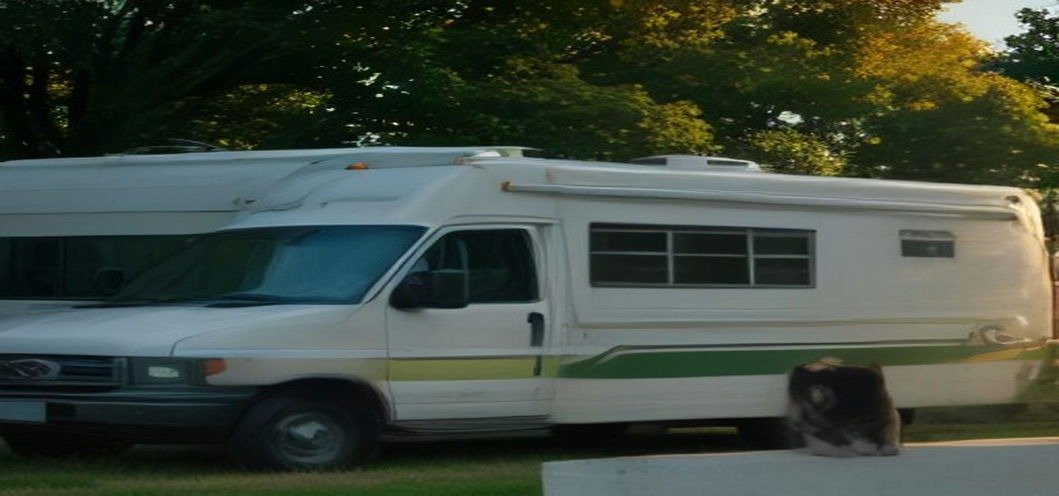
Quick answer: Donna Sicuranza is a Connecticut nonprofit executive best known as the Executive Director of Tait’s Every Animal Matters, commonly called TEAM, a Westbrook-based nonprofit that runs a mobile feline spay, neuter, and vaccination clinic. Her association with the organization stretches back to the planning of its mobile veterinary program in the 1990s, and TEAM reports that its veterinarians have sterilized and vaccinated more than 225,000 cats since the mobile clinic began operating in March 1997. She is not a veterinarian herself; her role is organizational leadership, communication, and keeping a long-running community service running year after year.
Donna Sicuranza is not a celebrity, and that is exactly what makes her biography interesting — and difficult to write honestly. Most of what the public knows about her comes from organizational records, professional profiles, historical news coverage, and TEAM’s own publications, not from interviews, memoirs, or social media. She has built her public identity around one very specific mission: making preventive veterinary care for cats affordable and reachable across Connecticut. This article brings together what is reported about her, explains where the reports agree and where they conflict, and separates what can be stated with confidence from what remains unconfirmed. Where a detail comes only from secondary sources, this article says so plainly. Where no reliable figure exists — such as for her age or net worth — it does not invent one.

Donna Sicuranza at a Glance: Quick Facts
| Fact | Reported detail |
|---|---|
| Full name | Donna Sicuranza (also listed as Donna J. Sicuranza; current staff listing: Donna Sicuranza Marconi) |
| Best known as | Executive Director of Tait’s Every Animal Matters (TEAM) |
| Organization | Tait’s Every Animal Matters, based in Westbrook, Connecticut |
| Current public role | Executive Director |
| Main area of work | Feline welfare and animal welfare |
| Main program | TEAM Mobile Feline Spay/Neuter Clinic |
| Clinic operating since | March 1, 1997 |
| Cats sterilized and vaccinated | More than 225,000 since 1997, according to TEAM |
| Earlier career | Journalism, editing, and public relations (reported) |
| Education | Listed as Trinity College-Hartford and Fairfield University in professional profiles (reported, not independently confirmed) |
| Verified birth date | None publicly confirmed |
| Verified age | None publicly confirmed |
| Verified net worth | None publicly confirmed |
| Public profile | Private outside her professional work; no verified public social media |
A quick facts table can make a life look simple and settled. In this case it should be read with care. Several entries — the education listings, the earlier journalism career, and the family details discussed later — are reported rather than confirmed by a primary public record. That does not mean the reports are wrong; it means the evidence is weaker than it is for a public figure who has given interviews. The birth date deserves a special warning: some websites publish an exact birth date and age for Donna Sicuranza, but those figures appear to come from the biography of a different woman with the same name, Donna Marie Sicuranza of New York, who died in 2017. This article presents no birth date for the Connecticut executive, because no reliable source has confirmed one.
Early Life and Family Background
Public information about Donna Sicuranza’s childhood and early upbringing is considerably more limited than the documentation of her professional career. Her exact date of birth, birthplace, and childhood experiences have not been reliably established in the authoritative sources available for this biography. Assigning her a precise age or describing specific events from her younger years would require evidence that is not currently available, so this article does not attempt either.
What emerges most clearly from the available material is a professional life with strong and enduring connections to Connecticut. Her involvement with TEAM developed in a community where veterinarians, animal caretakers, and nonprofit advocates were confronting problems associated with unwanted kittens and growing populations of unsterilized cats. That environment became central to her later work. Instead of presenting her early life as a conventional story of childhood ambitions and personal milestones, the available evidence supports a more focused understanding of the causes and professional relationships that shaped her public career.
Her family background has received some attention in online biographical writing, but not every personal claim has the same level of supporting documentation. A 2011 obituary for Robert Sicuranza identifies Donna J. Sicuranza of Westbrook as his daughter. Robert Sicuranza, also known as Red, served as an Army paratrooper during the Korean War, served on the board of Tait’s Every Animal Matters, and died on January 17, 2011. Another public obituary identifies Donna Sicuranza as the longtime partner of veterinarian Dr. John A. Caltabiano, who was involved in animal welfare and in the development of the FeralStat product. TEAM’s historical publications have also included other individuals with the Sicuranza surname, including Dina Sicuranza, identified by the organization as a Senior Veterinary Technician, and Marlene Sicuranza, listed in a TEAM staff directory as an application assistant. The existence of multiple people with the same surname within TEAM is documented, although their specific family relationships should be established through reliable records rather than assumed from their names. Beyond these documented references, detailed claims about her spouse, children, or household should be treated carefully. A person’s professional biography does not provide permission to fill gaps with assumptions.
Education and Earlier Career in Journalism and Public Relations
Donna Sicuranza’s career did not begin in veterinary medicine. Historical reporting describes her background as involving journalism and public relations before she became deeply involved with TEAM. A professional profile lists her work with TEAM beginning in March 1997 and records earlier freelance work in writing, editing, and public relations. The same profile lists education at Trinity College-Hartford and Fairfield University.
This background helps explain the communication side of nonprofit leadership. Running a public-facing organization requires communication with donors, volunteers, community groups, animal owners, and partner organizations. Journalism and public relations involve presenting information clearly, understanding public concerns, and communicating with different audiences. In animal welfare, these abilities can help organizations explain why preventive care matters, address misunderstandings about unfamiliar services, and encourage residents to participate in community programs.
Two cautions belong here. First, some professional listings associate Sicuranza with Fairfield University and Trinity College in Hartford, but her exact academic qualifications and graduation dates are not established sufficiently through institutional records reviewed for this article. Those details should therefore be treated as reported educational information rather than an independently confirmed academic biography. Second, her connection to writing and editorial work continued during her time at TEAM: the organization’s 2019 newsletter identified her as its Executive Director and editor, demonstrating that communication remained part of her documented professional activities long after the mobile clinic began operating.
How Donna Sicuranza Became Involved With Animal Welfare
Donna Sicuranza’s involvement in animal welfare developed through her association with veterinarian Dr. John A. Caltabiano, who played a central role in establishing TEAM’s mobile feline program. A 2013 Connecticut Magazine report described how Caltabiano had previously worked to connect people seeking animals with those needing to place pets in new homes. His early nonprofit efforts encountered financial difficulties, but a later charitable bequest helped revive and reshape the organization.
The funding came from the estate of Vernon A. Tait, an animal lover and businessman whose contribution supported the development of an organization bearing his name. The nonprofit became associated with Tait’s Every Animal Matters, eventually concentrating its efforts on a specific and persistent animal welfare problem: feline overpopulation.
According to the historical reporting, Caltabiano established a telephone service through which residents could raise concerns about animals. Many inquiries involved unwanted cats, repeated litters of kittens, and difficulties managing free-roaming feline populations. These concerns highlighted a problem that traditional rescue efforts could not necessarily resolve on their own. Sicuranza was working in journalism and public relations during this period and became involved in helping develop a practical response. The approach centered on reducing unwanted reproduction by making sterilization services affordable and geographically accessible. Rather than expecting every caretaker to travel to an established veterinary hospital, the organization could bring medical services closer to communities. This decision shaped the direction of TEAM and became the defining project of Sicuranza’s public career.
The Launch of TEAM’s Mobile Feline Clinic
The development of TEAM’s mobile veterinary program marked an important milestone in Connecticut animal welfare. According to the organization’s history, planning began in 1996 under the direction of Caltabiano, then TEAM’s president, and Sicuranza, who was serving as Executive Director. On March 1, 1997, the mobile feline spay-and-neuter clinic began operating. The initiative brought veterinary equipment and professional medical staff into a vehicle designed to provide sterilization services outside a conventional hospital setting. At the time, the concept attracted attention because it combined affordable care with a traveling delivery model.
TEAM’s own historical account describes the early response as strong. The organization reports that approximately 5,000 cats had been sterilized within the program’s first six months and around 8,000 by its first anniversary. Historical reporting from 2001 described the organization as running Connecticut’s first mobile cat clinic, and at that time TEAM reported having sterilized more than 40,000 cats since the program began. Historical reporting also shows that the program was already serving communities and performing an average of about 40 surgeries per visit in its early years.
The clinic’s early growth reflected a broader reality about animal care. Many people caring for cats understood the importance of preventing unwanted litters but faced financial or practical barriers to obtaining veterinary treatment. Mobile services offered a different way to reach these households and caretakers. Although the program required trained veterinarians and veterinary technicians to carry out medical procedures, it also depended on scheduling, public communication, administration, and long-term organizational planning. Sicuranza’s executive position placed her within the leadership structure responsible for sustaining that wider operation.
TEAM’s Growth Over Time
| Year | Reported milestone |
|---|---|
| 1996 | Planning for the mobile clinic begins under Caltabiano and Sicuranza |
| March 1, 1997 | TEAM Mobile Feline Spay/Neuter Clinic begins operating |
| 1997 (first 6 months) | Approximately 5,000 cats sterilized, according to TEAM |
| 1998 (first anniversary) | Around 8,000 cats sterilized, according to TEAM |
| 2001 | More than 40,000 cats sterilized; described as Connecticut’s first mobile cat clinic |
| 2013 | Cumulative total approximately 160,000 procedures, per Connecticut Magazine |
| Today | More than 225,000 cats sterilized and vaccinated, according to TEAM |
These figures come from TEAM’s own reporting and from historical news coverage of the organization. They are organizational claims rather than independently audited statistics, and this article presents them that way. What they show consistently, across decades of reporting, is a program that started small, grew quickly, and kept operating.
Donna Sicuranza’s Career as TEAM Executive Director
Donna Sicuranza’s long association with TEAM is one of the clearest and most substantial elements of her biography. Historical organizational materials and reporting identify her in leadership positions across different periods, while the current staff directory lists her as Executive Director under the name Donna Sicuranza Marconi. An executive director at a nonprofit organization generally holds responsibility for organizational management and works with staff, partners, and supporters to maintain the organization’s mission. Although the precise details of Sicuranza’s daily responsibilities are not fully documented publicly, her leadership role and long professional involvement are well established.
Her public-facing responsibilities can also be traced through historical news coverage. In July 2001, reporting about a planned TEAM clinic visit to Durham, Connecticut, identified Sicuranza as a spokesperson for the organization. She discussed demand for veterinary services in rural communities, particularly among caretakers of barn cats and feral cats. This reporting provides a useful example of her professional involvement beyond an executive title. At a time when mobile veterinary services were still comparatively unfamiliar to many residents, explaining their purpose and availability was important to connecting the program with people who needed it.
The organization’s later publications offer additional evidence of continuity. TEAM’s 2019 newsletter listed Donna J. Sicuranza among its administrative personnel, while its current staff directory continues to identify her in executive leadership. Together, these records demonstrate a sustained association with the same animal welfare mission over multiple decades. That continuity is the heart of her story: rather than moving between unrelated industries, her public work has centered on one specific goal for nearly thirty years.
How TEAM’s Mobile Veterinary Program Works
Understanding Donna Sicuranza’s professional significance requires understanding the service provided by TEAM. The nonprofit operates a mobile feline spay, neuter, and vaccination clinic that travels to communities throughout Connecticut. Its purpose is to provide preventive veterinary care for cats whose owners or caretakers may otherwise face barriers to obtaining those services.
Spaying and neutering are surgical procedures that prevent animals from reproducing. In cats, these procedures are widely used to reduce unwanted litters and help manage populations of unsterilized animals. When large numbers of cats reproduce without sufficient homes or resources available, the consequences can include pressure on animal shelters, increased abandonment, and greater challenges for volunteer caretakers.
TEAM’s published service information describes a package that includes:
- A brief veterinary examination
- Sterilization surgery (spay or neuter)
- Specified vaccinations
- Nail trimming
- Ear mite treatment when needed
- Information about additional preventive services, including parasite care
The mobile program accepts domestic and feral cats from Connecticut. This is significant because feral cats may be difficult to handle or transport and often depend on volunteers or community caretakers for assistance. A mobile service can reduce some geographical barriers, although appointments, eligibility conditions, and safe handling arrangements remain important. TEAM states that any Connecticut cat, including feral cats, is welcome on the mobile clinic.
The clinical work belongs to TEAM’s veterinarians and technicians, not its executive director personally. Sicuranza’s importance is therefore best understood through her documented leadership association with the organization that has maintained this service over time.
Is Donna Sicuranza a Veterinarian?
No reliable official source identifies Donna Sicuranza as a veterinarian. TEAM lists her as Executive Director. The organization’s veterinary staff includes a Medical Director, currently listed as Art Heller, DVM, and veterinary technicians. This distinction is useful because some online biographies blur organizational leadership with veterinary work. Donna Sicuranza’s contribution is tied to nonprofit management and the continuation of TEAM’s feline welfare program, not to performing surgery herself.
The confusion is understandable: she has spent decades leading an organization whose entire purpose is veterinary care. But the roles are different, and the distinction matters for an accurate biography. She runs the organization; the veterinarians perform the procedures.
The Impact of TEAM on Connecticut’s Cat Population
TEAM reports that its veterinarians have sterilized and vaccinated more than 225,000 cats since the mobile clinic began operating in 1997. That cumulative figure represents the organization’s reported service history rather than the number of animals personally treated by any individual executive. The distinction matters because the program’s results reflect the combined work of medical professionals, administrative personnel, donors, volunteers, and community members who bring cats for treatment. Sustaining a mobile veterinary service over decades requires cooperation among all these groups.
Historical reporting helps illustrate the program’s development. In 2001, the organization had already reported more than 40,000 cats sterilized since its launch. By the time Connecticut Magazine examined TEAM’s work in 2013, the cumulative number had reached approximately 160,000 procedures. The organization’s current published total exceeds 225,000.
The work addresses a problem that shelters and rescue groups alone cannot solve. Feline overpopulation is one of the central issues behind TEAM’s work. When cats are not sterilized, reproduction can increase the number of kittens entering shelters, rescue systems, outdoor colonies, and private homes. Spay and neuter programs address the problem before unwanted litters occur. TEAM’s approach combines sterilization with vaccination and community access, so the goal is broader than providing a single veterinary appointment. It is a prevention strategy applied at the scale of a whole state, sustained for decades.
Why the Mobile Model Works
The mobile model gives the organization a way to bring services closer to communities. This is particularly relevant for feline population control because domestic and feral cats live in many different settings. Some owners and caretakers have difficulty transporting animals to a conventional veterinary facility. TEAM’s work demonstrates several practical points about community animal care:
- Access matters. A service can exist without being easy for people to reach. Mobile clinics reduce some transportation and location barriers.
- Cost matters. Affordable veterinary services can make preventive care more realistic for owners and community cat caretakers.
- Prevention matters. Spay and neuter programs address future population growth rather than dealing only with unwanted litters after they appear.
- Continuity matters. TEAM has operated its mobile clinic since 1997. Long-running programs depend on funding, staff, scheduling, community relationships, and ongoing administration.
Donna Sicuranza’s professional role sits within that larger system. She did not invent the surgery, and she does not perform it. What she has done, according to the organizational record, is help lead the organization that keeps the clinic moving, funded, staffed, and scheduled — year after year, town after town.
Donna Sicuranza Marconi and Donna Sicuranza: The Name Question
The name change can create confusion. TEAM’s current staff page identifies its Executive Director as Donna Sicuranza Marconi. Older sources use Donna Sicuranza or Donna J. Sicuranza. The continuity of the organization, role, and professional records indicates these names refer to the same person. The reason for the Marconi surname is not clearly established in the official material reviewed here. It is better to state what the records show rather than speculate about her private circumstances.
Readers searching for her should treat all three name forms — Donna Sicuranza, Donna J. Sicuranza, and Donna Sicuranza Marconi — as references to the same Connecticut nonprofit executive. The older name forms appear in historical reporting and organizational publications from the 1990s and 2000s; the Marconi form appears in TEAM’s current staff listing.
Is Donna Sicuranza the Same Person as Donna Marie Sicuranza?
No. This is one of the most important points for anyone researching her biography, and it is also the mistake most commonly made by the pages currently ranking for her name.
Donna Marie Sicuranza was a different woman associated with New York. According to her obituary, she was born March 24, 1942, worked at the Bank of New York in Bronxville for more than 20 years, retired as an Assistant Manager in 2007, and died March 10, 2017, at age 74. Her obituary also identifies her husband as Angelo Sicuranza and mentions three daughters and 10 grandchildren. Those details belong to Donna Marie Sicuranza and should not be assigned to the Connecticut nonprofit executive.
The two biographies are clearly different:
| Detail | Donna Sicuranza Marconi | Donna Marie Sicuranza |
|---|---|---|
| Main field | Animal welfare | Banking |
| Location | Connecticut | New York |
| Organization | Tait’s Every Animal Matters | Bank of New York |
| Public role | Executive Director | Former Assistant Manager |
| Status in public records | Current TEAM leadership | Died in 2017 |
| Age information | Not reliably established | 74 at death |
This separation prevents one of the most common errors found in online searches for the name. Several of the pages currently ranking for “donna sicuranza” merge the two women, assigning the New York banker’s twenty-year banking career, her 2007 retirement, and sometimes her birth and death dates to the Connecticut animal welfare executive. That is a serious biographical error, and it is the single biggest weakness in the existing coverage.

What Is Known — and What Is Not
The limits of the story are part of the story, and a good profile states them clearly. Here is the honest position on the questions readers ask most:
- Birth date: No verified birth date exists. Some websites list an exact birth date and age, but those figures appear to come from the biography of Donna Marie Sicuranza, the New York woman who died in 2017. For that reason, an exact age should not be presented as fact without a dependable source.
- Age: No age can be confirmed without a verified birth date. Any page stating her age as a certainty is overstating the evidence.
- Net worth: There is no reliable public figure establishing Donna Sicuranza’s personal net worth. Nonprofit financial records and organizational revenue should not be treated as an individual’s personal wealth. Any website presenting a precise net worth without documented financial evidence is making an estimate rather than reporting a verified fact.
- Education: Trinity College-Hartford and Fairfield University are listed in professional profiles, but graduation dates and exact qualifications are not independently confirmed.
- Family: A 2011 obituary identifies her as the daughter of Robert Sicuranza of Westbrook, and another obituary identifies her as the longtime partner of Dr. John A. Caltabiano. Beyond these documented references, detailed claims about her spouse, children, or household should be treated carefully.
- The Marconi surname: The reason for it is not clearly established in official material, and this article does not speculate about it.
- Daily responsibilities: The precise details of her day-to-day work as Executive Director are not fully documented publicly, although her leadership role and long association with TEAM are well established.
- Veterinary credentials: She is not a veterinarian, and no reliable source identifies her as one.
The pattern is consistent: the facts that come from TEAM’s own records, historical news reporting, and multiple credible sources can be stated with confidence. The facts that come from a single blog, or from pages copying each other, must be labelled as reports. Readers deserve to know which is which.
What Competitors Get Wrong: Conflicting Details Explained
The top pages about Donna Sicuranza repeat the same basic facts — TEAM executive, mobile cat clinic, Connecticut — but differ on details and rarely explain the differences. Their gaps are consistent: repetitive thin content, an unverified birth date stated as fact, the two-women mix-up left unaddressed, weak FAQs, and no honest handling of what is unknown.
| Detail | What sources say | What to make of it |
|---|---|---|
| Banking career | One magazine-style biography says she worked 20+ years in commercial banking and retired from the Bank of New York in 2007 | Those details belong to Donna Marie Sicuranza of New York, who died in 2017 — a different person |
| Birth date and age | Some pages state an exact birth date and age | No reliable birth date exists for the Connecticut executive; published dates trace to the New York namesake |
| Net worth | Specific figures on some celebrity-style pages | No verified figure exists; any number is speculation |
| Her role | Some pages imply she performs the veterinary work | She is Executive Director; veterinarians and technicians perform the procedures |
| Cats treated | 200,000+ or 225,000+ depending on the page | Both are TEAM’s reported cumulative totals at different dates; the current figure exceeds 225,000 |
| “Donna sicuranza” as a concept | One site treats the name as a generic idea about female empowerment and security | That page is not a biography at all; it invents statistics and cites sources that cannot be verified |
| Family | Some pages make confident claims about her household | Only the obituary references are documented; the rest should be treated carefully |
The banking-career error shows how the confusion works. An obituary for Donna Marie Sicuranza, a Bank of New York employee, is picked up by a biography site, and her twenty-year banking career and 2007 retirement are attached to the Connecticut executive’s name. Other pages copy it, and after a few repetitions it starts to look like a settled fact. The honest answer is to separate the two women, give each her own record, and refuse to assign the banker’s career to the animal welfare executive.
The “empowerment concept” page is a different kind of problem. It treats “donna sicuranza” — Italian for “safe woman” or “secure woman” — as a generic idea about personal protection, economic independence, and inner strength, and it supports that idea with statistics attributed to sources that cannot be verified, including a “Journal of Behavioral Safety, 2026” and a claim that women with an autonomous savings plan are 30 percent more likely to react positively to career crises. None of that has anything to do with the actual person. Readers searching for a biography should ignore it entirely.
Readers can protect themselves with five simple checks:
- Check whether a page names its source for a fact, or just repeats it.
- Compare two or three pages on the same detail, especially age, place, and money.
- Treat a specific number with suspicion when no source or interview supports it.
- Prefer a page that says “reported” over one that states everything as certain.
- Remember that two people can share a name — and that a private person leaves a thinner public record, not a gap to fill with guesses.
What Can Be Learned From TEAM’s Model
TEAM’s work demonstrates several practical points that apply well beyond Connecticut. For readers who care for cats, volunteer with rescues, or support animal welfare organizations, the model offers lessons worth noting.
First, prevention is cheaper and kinder than reaction. Sterilizing a cat before it produces a litter prevents a chain of kittens that shelters, rescues, and caretakers would otherwise have to absorb. The math is simple, but the logistics are hard: the service has to reach the cats, and the caretakers have to be able to afford it. A mobile clinic solves the first problem by traveling, and subsidized pricing solves the second.
Second, feral and community cats need a different approach from owned pets. A feral cat cannot be booked into a regular veterinary appointment like a house cat. It needs trapping, safe handling, and a service that expects feral animals. TEAM’s willingness to accept feral cats is part of why its program has mattered for population control rather than only for individual pet owners.
Third, long-running programs need administrative leadership as much as medical skill. A mobile clinic needs schedules, community locations, veterinary personnel, equipment, patient appointments, outreach, funding, administrative work, communication with cat owners and caretakers, and support for the mobile unit itself. None of that happens without someone running the organization. Donna Sicuranza’s documented contribution is exactly that: the sustained leadership that keeps a specialized nonprofit operating for decades.
Fourth, communication is part of animal welfare. Sicuranza’s background in journalism and public relations, and her role as editor of TEAM’s newsletter, point to a simple truth: a service only helps the people who know about it. Explaining the program to rural communities, barn cat caretakers, and feral cat volunteers was part of the work from the beginning, as the 2001 Durham reporting shows.
For readers who want to support this kind of work, the practical steps are straightforward: spay or neuter your own cats, support trap-neuter-return programs for community cats, donate to or volunteer with local spay-neuter organizations, and check whether a mobile clinic serves your area. Like the private parents behind famous children profiled elsewhere on this site — such as William Huckleberry Paisley and Carol Hagen — Donna Sicuranza’s story is a reminder that the most durable public work is often done by people who never seek the spotlight.
Frequently Asked Questions About Donna Sicuranza
Who is Donna Sicuranza?
Donna Sicuranza is a Connecticut nonprofit executive best known as the Executive Director of Tait’s Every Animal Matters (TEAM), a Westbrook-based nonprofit that operates a mobile feline spay, neuter, and vaccination clinic. Her association with the organization stretches back to the planning of its mobile veterinary program in the 1990s.
What is Tait’s Every Animal Matters (TEAM)?
TEAM is a Connecticut nonprofit focused on feline welfare. Its main service is a mobile clinic that travels to communities across the state, providing spay, neuter, and vaccination services for domestic and feral cats. The organization says any Connecticut cat, including feral cats, is welcome on the mobile clinic.
When did the TEAM mobile clinic start?
The TEAM Mobile Feline Spay/Neuter Clinic began operating on March 1, 1997. Planning began in 1996 under veterinarian Dr. John A. Caltabiano, then TEAM’s president, and Donna Sicuranza, who was serving as Executive Director.
How many cats has TEAM helped?
TEAM reports that its veterinarians have sterilized and vaccinated more than 225,000 cats since the mobile clinic began operating in 1997. That figure is the organization’s own reported cumulative total, not an independently audited statistic, and it represents the work of the whole organization rather than any one individual.
Is Donna Sicuranza a veterinarian?
No. No reliable official source identifies her as a veterinarian. She is TEAM’s Executive Director, and the clinical procedures are carried out by the organization’s veterinarians and veterinary technicians, including its Medical Director, Art Heller, DVM.
How old is Donna Sicuranza?
Her age cannot be confirmed because no verified birth date exists. Some websites list an exact birth date and age, but those figures appear to come from the biography of Donna Marie Sicuranza, a different woman from New York who died in 2017. Any page stating her age as a certainty is overstating the evidence.
What is Donna Sicuranza’s net worth?
Her net worth is not publicly confirmed, and there is no verified figure. Nonprofit financial records and organizational revenue should not be treated as an individual’s personal wealth, so any dollar amount seen online should be treated as speculation.
Did Donna Sicuranza work in banking?
No — that is the most common error in online biographies of her. The twenty-year banking career at the Bank of New York and the 2007 retirement belong to Donna Marie Sicuranza of New York, who died in 2017. The Connecticut executive’s earlier career, according to professional profiles, was in journalism, editing, and public relations.
What is Donna Sicuranza Marconi?
Donna Sicuranza Marconi is the name under which TEAM’s current staff page lists its Executive Director. Older sources use Donna Sicuranza or Donna J. Sicuranza. The continuity of the organization, role, and professional records indicates these names refer to the same person.
Where does Donna Sicuranza live?
She is associated with Westbrook, Connecticut, where TEAM is based. A 2011 obituary identified Donna J. Sicuranza of Westbrook as the daughter of Robert Sicuranza. Beyond that, her private life is not publicly documented, and this article does not speculate about it.
Is Donna Sicuranza active on social media?
No active public social media presence for her has been verified. She has maintained a limited public profile outside her professional activities, and most information about her comes from organizational records and news reporting rather than from her own public accounts.
Final Thoughts
Donna Sicuranza is a Connecticut nonprofit executive whose public identity is tied to one long-running mission: making preventive veterinary care for cats accessible across her state. As Executive Director of Tait’s Every Animal Matters, she helped plan and launch Connecticut’s first mobile feline spay-and-neuter clinic in March 1997, and she has remained associated with the organization ever since. TEAM reports that its veterinarians have sterilized and vaccinated more than 225,000 cats since then — a figure that belongs to the organization as a whole, not to any one person, but one that would not exist without the sustained administrative leadership that kept the clinic moving, funded, and scheduled for nearly three decades.
The limits of the story are part of the story. Her birth date, her age, and her net worth are not publicly confirmed, and the birth date some websites state belongs to a different woman. The banking career some pages assign her belongs to that same different woman, Donna Marie Sicuranza of New York, who died in 2017. Her earlier career, according to professional profiles, was in journalism and public relations, and her education is listed as Trinity College-Hartford and Fairfield University — reported, not independently confirmed. She is not a veterinarian; she is the executive who runs the organization that employs them. A good biography states those limits clearly, so readers can tell a fact from a report and a guess.
In short: she is the Executive Director of TEAM, a Westbrook, Connecticut nonprofit that has run a mobile feline spay, neuter, and vaccination clinic since 1997, and her story is one of steady, unglamorous, decades-long public service rather than fame. Readers who enjoy profiles of private people behind lasting work may also like our articles on William Huckleberry Paisley and Carol Hagen, two more low-profile figures whose stories are best told with the same care about what is — and is not — verified.
